
Garage door panel replacement · Warren, MI
Garage Door Panel Replacement
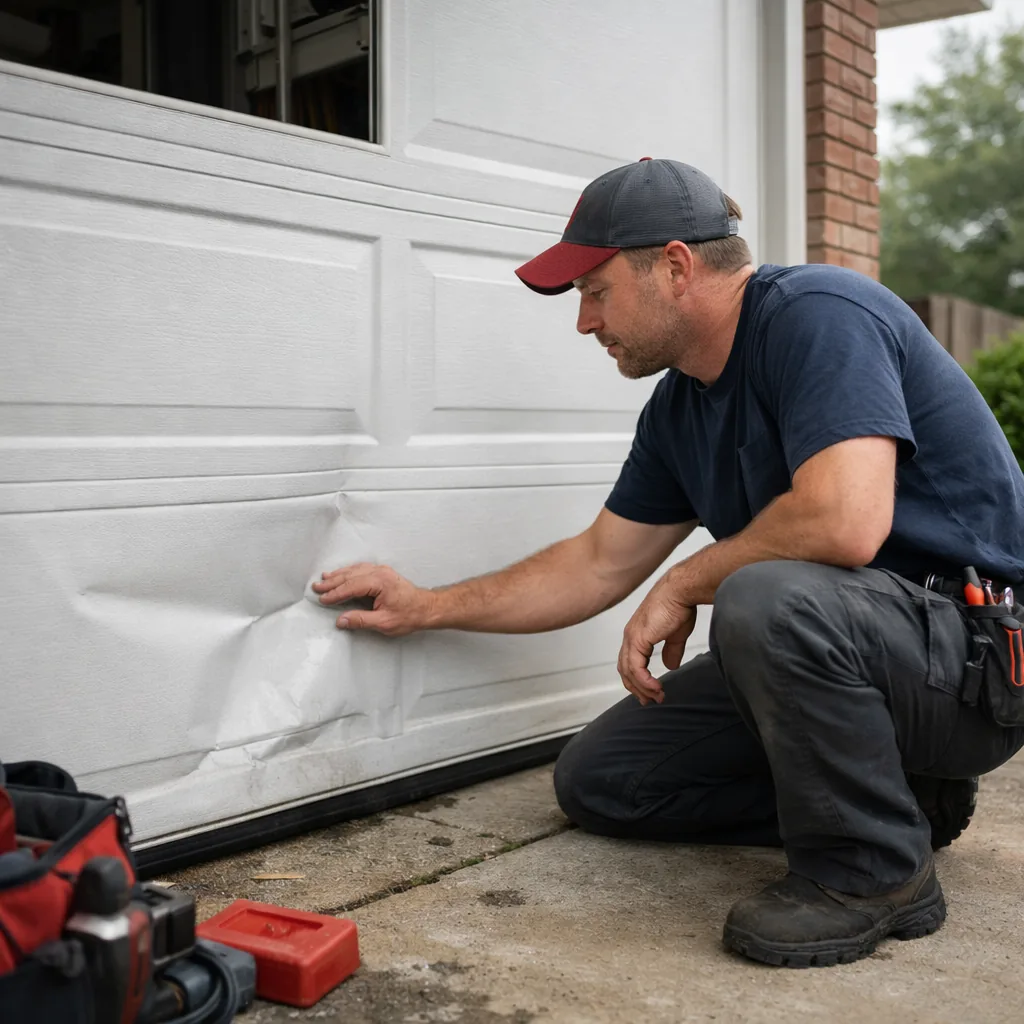
Dented, cracked or caved in by a bumper? We come to your garage in Warren, look at the damaged panel, and tell you whether it can be repaired or needs to be replaced. Describe the damage when you call.
- Licensed and insured
- Parts-and-labor warranty
- Upfront quote before work
- Locally owned
Damaged panels
When a damaged garage door panel needs replacing
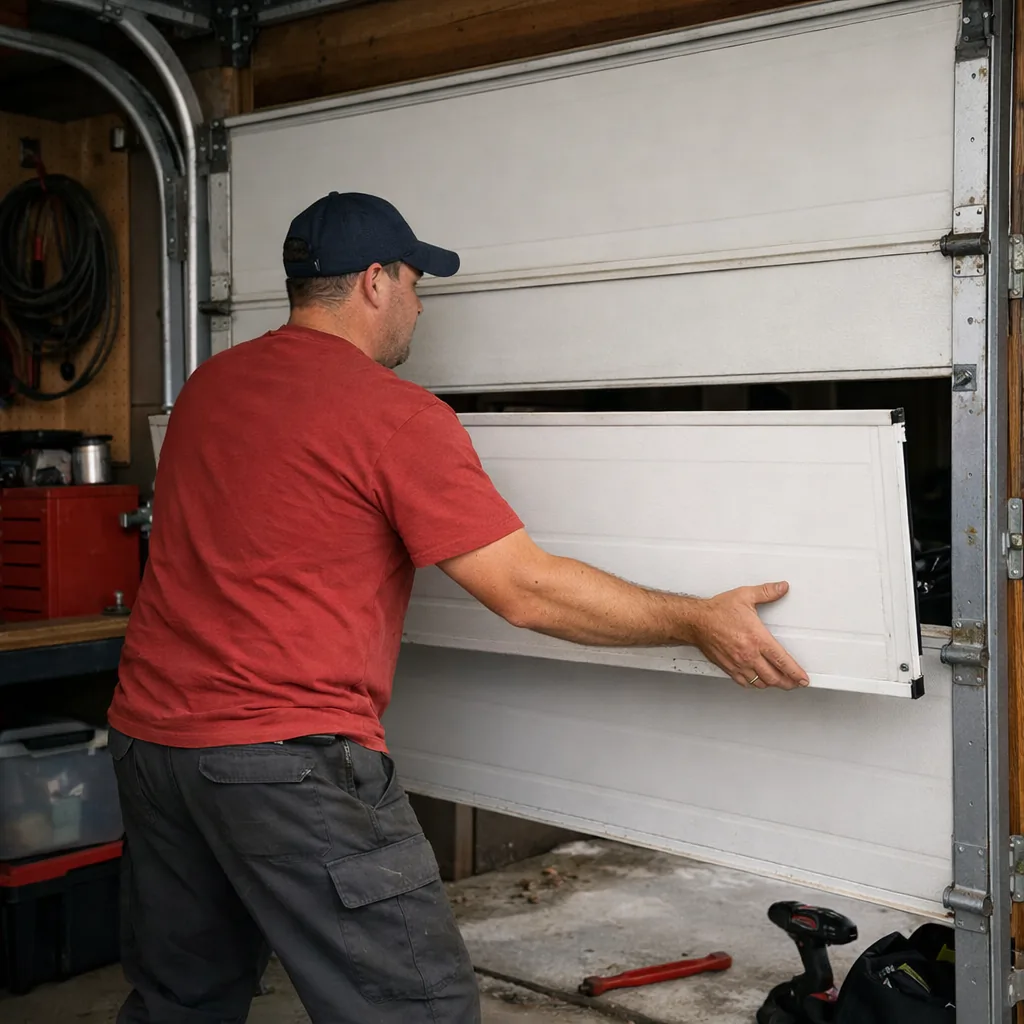
Garage door panel replacement means taking out one damaged panel of a sectional door and fitting a new one in its place. A sectional door is built from 4 or more horizontal panels joined by hinges and guided by rollers in the track. When a car backs into the door, a ball hits it, or the door closes on something, usually one panel takes the damage, most often the bottom one.
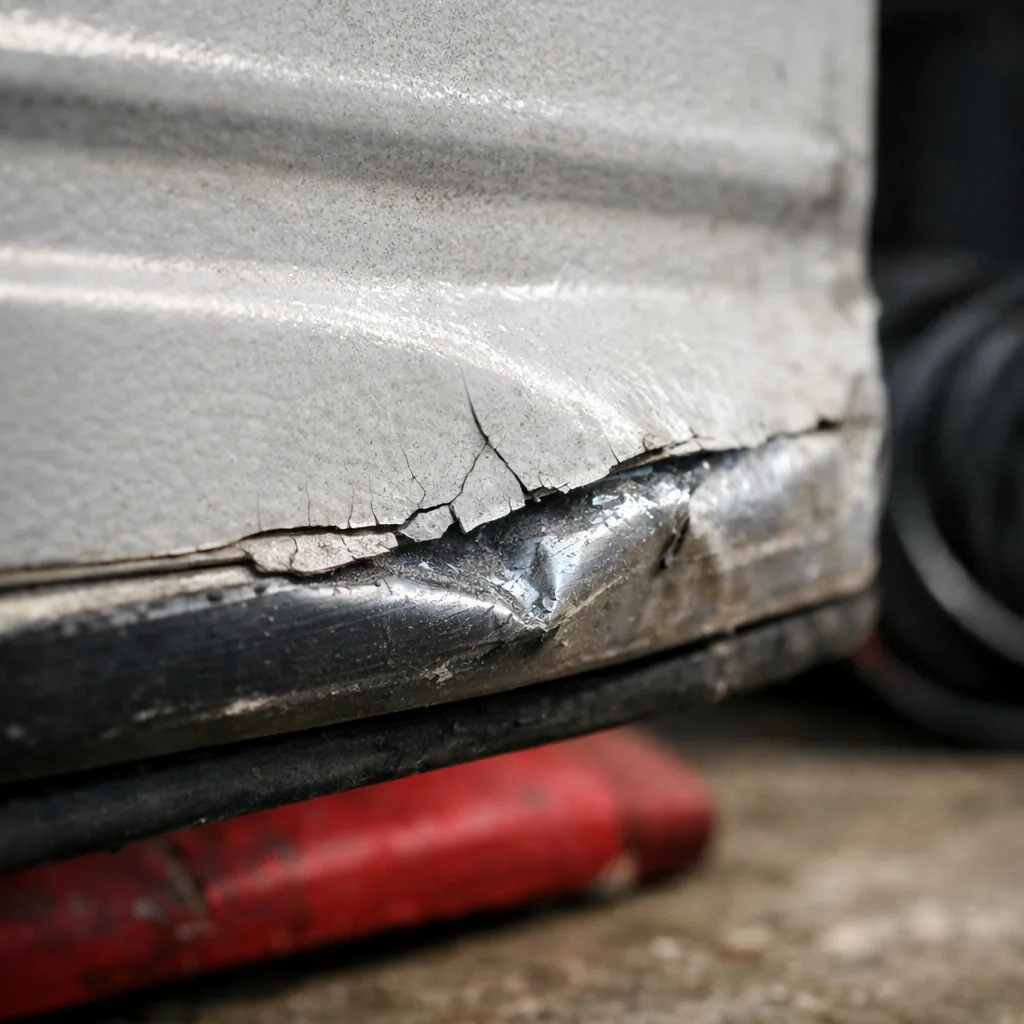
Small dents in a steel panel are often cosmetic, and a shallow dent in garage door steel can sometimes be worked out. A crease is different. Where the steel has folded sharply, it is weakened, and the panel can buckle later when the door is cycled. Cracks in the face, a split along the joint between panels, a bent bottom edge that stops the seal from closing, or a panel that has pulled away from its hinges are all reasons to replace. In Michigan, road salt on the lower panel also rusts through damaged paint, so a dent that is ignored tends to turn into rot or corrosion along the bottom edge.
The catch is availability. A new panel has to fit your door's size, thickness, design and color. For a current door that is straightforward. For an older or discontinued model, a matching panel may be impossible to source, and then a new door is the sound route.
Repair or replace
What decides repair or replacement for a damaged garage door panel
The depth and shape of the dent
A shallow, rounded dent can sometimes be pulled out and the finish touched up. A sharp crease or a dent that runs along a stiffening rib has weakened the steel, and a repair will not hold.
Cracks, splits and torn joints
Fiberglass, wood and steel panels each fail differently. We check the joint where panels meet, the hinge mounting points and the bottom edge, because a damage you can see often hides a worse one behind it.
Panel and door compatibility
Replacing one panel only works when a matching one exists. We identify the door's height, thickness, insulation type and design, and tell you honestly if a replacement can be sourced.
Hinges, rollers and struts
An impact that dented the panel often bends hinges and rollers too. We inspect the hardware around the damage and the horizontal struts that stiffen wide doors.
The look of the whole door
A new panel on an old door can be visibly different in color or finish. We explain that before we start so the result is not a surprise.
Panel swap
How a panel replacement goes
-
Tell us about the damage
Which panel, how it was hit, whether the door still opens and closes. If the door is stuck, leave it and do not force it.
-
We come out and assess
Our uniformed technician examines the panel, its hinges and the tracks, and measures the door so we know exactly what would be needed.
-
We explain it and quote it
You hear whether repair is realistic or replacement is better, and get an upfront quote before any work begins.
-
We fit the new panel
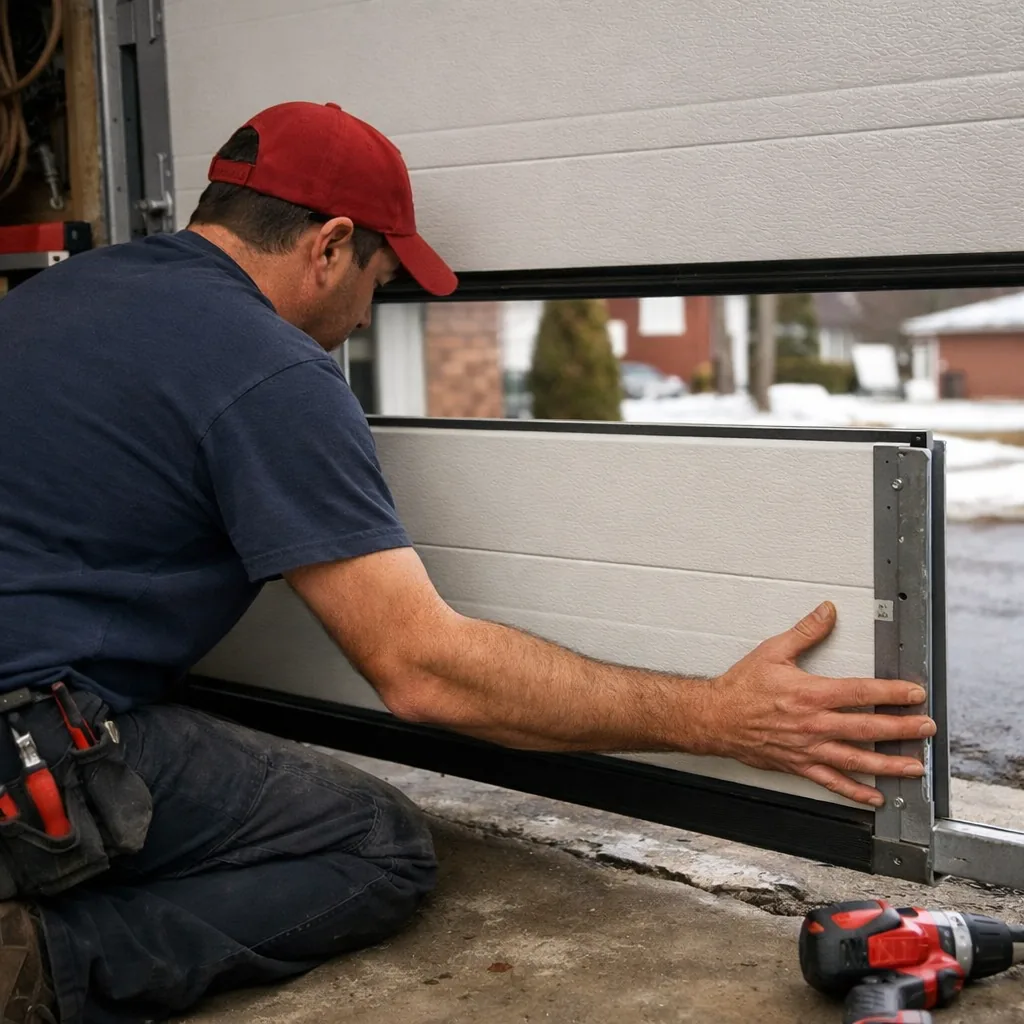
We release the tension safely, remove the damaged panel, fit the new one with the hinges and rollers, and balance the door. The work is backed by a parts-and-labor warranty.
A buckled panel can bend the tracks the next time the door runs.
Tell us where it was hit and we will tell you whether it needs a repair or a new panel.
Panel work
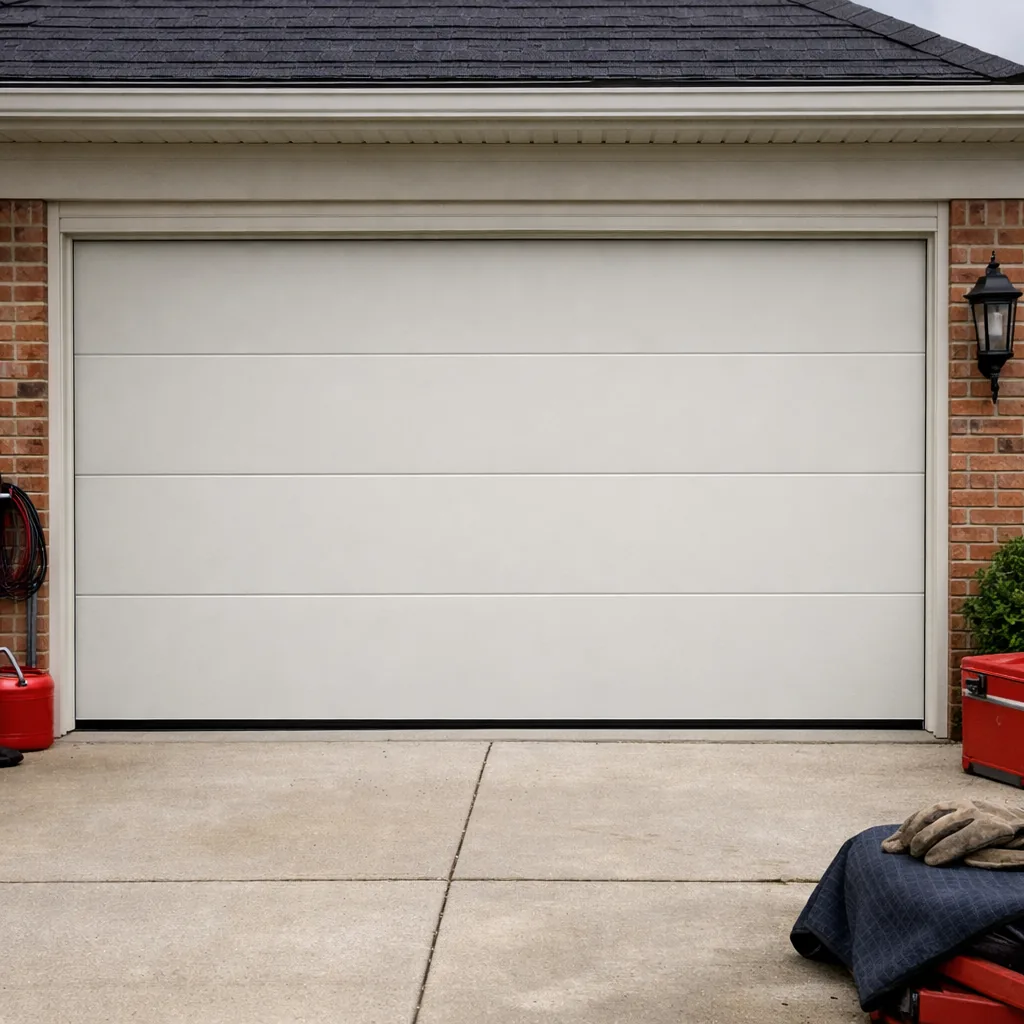
Panel work and the finished result
Panel FAQ
Garage door panel questions
Can a dent in my garage door be fixed without replacing the panel?
Can you replace just one panel?
Is it cheaper to repair or replace a garage door panel?
Is the door safe to use with a damaged panel?
How long does it take?
Will the new panel match the rest of my door?
Dents and cracks
Dented or cracked panel on your garage door?
Tell us what hit it and what it looks like. We will come out, check the damage, and explain the repair before any work starts.