
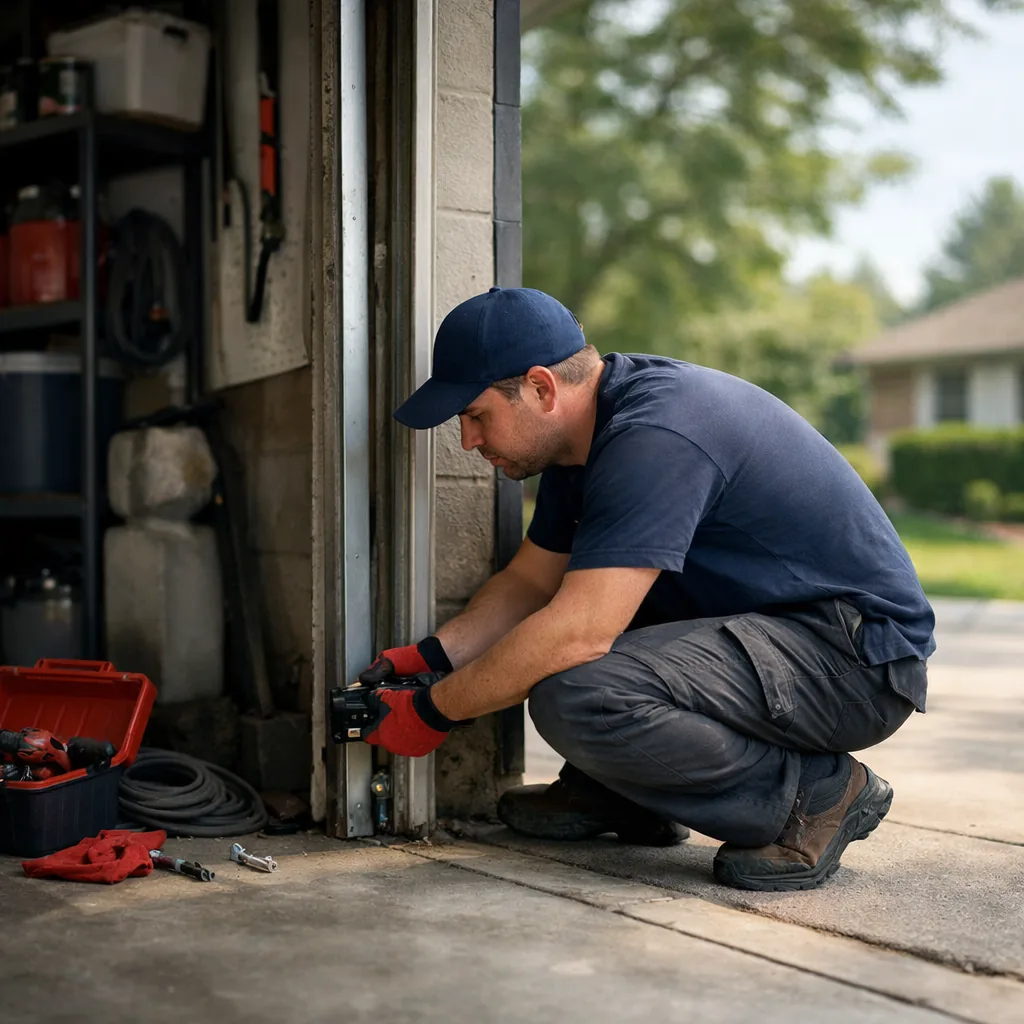
Garage door sensor repair · Warren, MI
Garage Door Sensor Repair
Door reverses before it reaches the floor, or the opener light blinks and nothing moves? We come to your garage in Warren, find out why the safety sensors are not seeing each other, and fix it. Tell us what the door is doing when you call.
- Licensed and insured
- Parts-and-labor warranty
- Upfront quote before work
- Locally owned
Sensor repair
Why a garage door sensor stops working
Garage door sensor repair is one of the most common calls we take, and the cause is usually small. Every opener sold for home use has a pair of safety sensors, one on each side of the door, mounted a few inches off the floor. One sends an invisible beam across the opening and the other receives it. If anything breaks that beam while the door is closing, the opener is built to stop and reverse. If the two units cannot see each other at all, many openers refuse to close the door by remote or wall button.
That is why a door that goes down halfway and bounces back, or one that flashes the opener light and does not move, so often points at the sensors and not at the opener itself. The usual causes are a bracket that has been bumped out of line by a bike or a trash can, a lens covered in dust, cobwebs or road salt film, a pinched or chewed low-voltage wire, a loose terminal where the wire meets the opener, or a sensor that has simply worn out. A Michigan winter adds slush, salt spray and frost to that list, since the sensors sit at the lowest and wettest point of the opening.
If an older opener is also acting up, we will tell you whether opener repair is the better next step once the sensors are sorted.
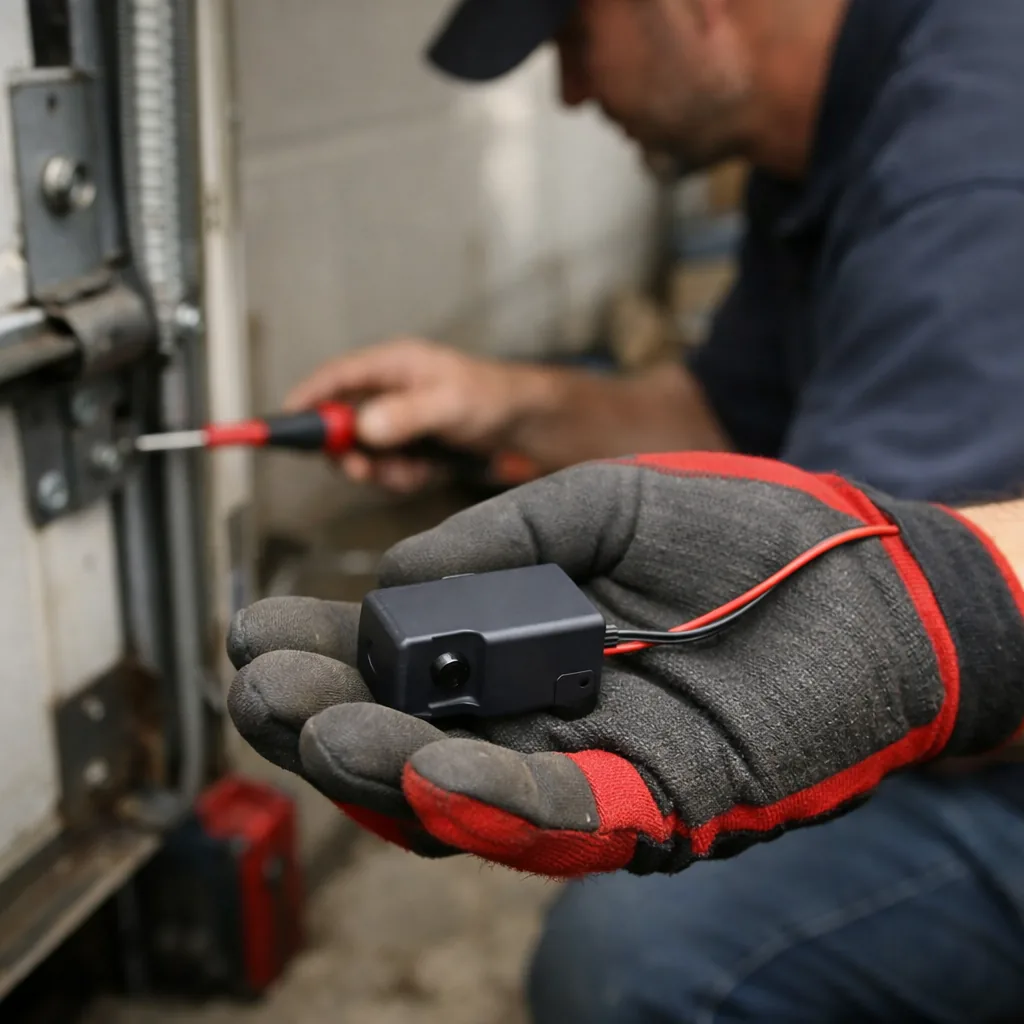
Sensor checks
What we check first on a garage door safety sensor
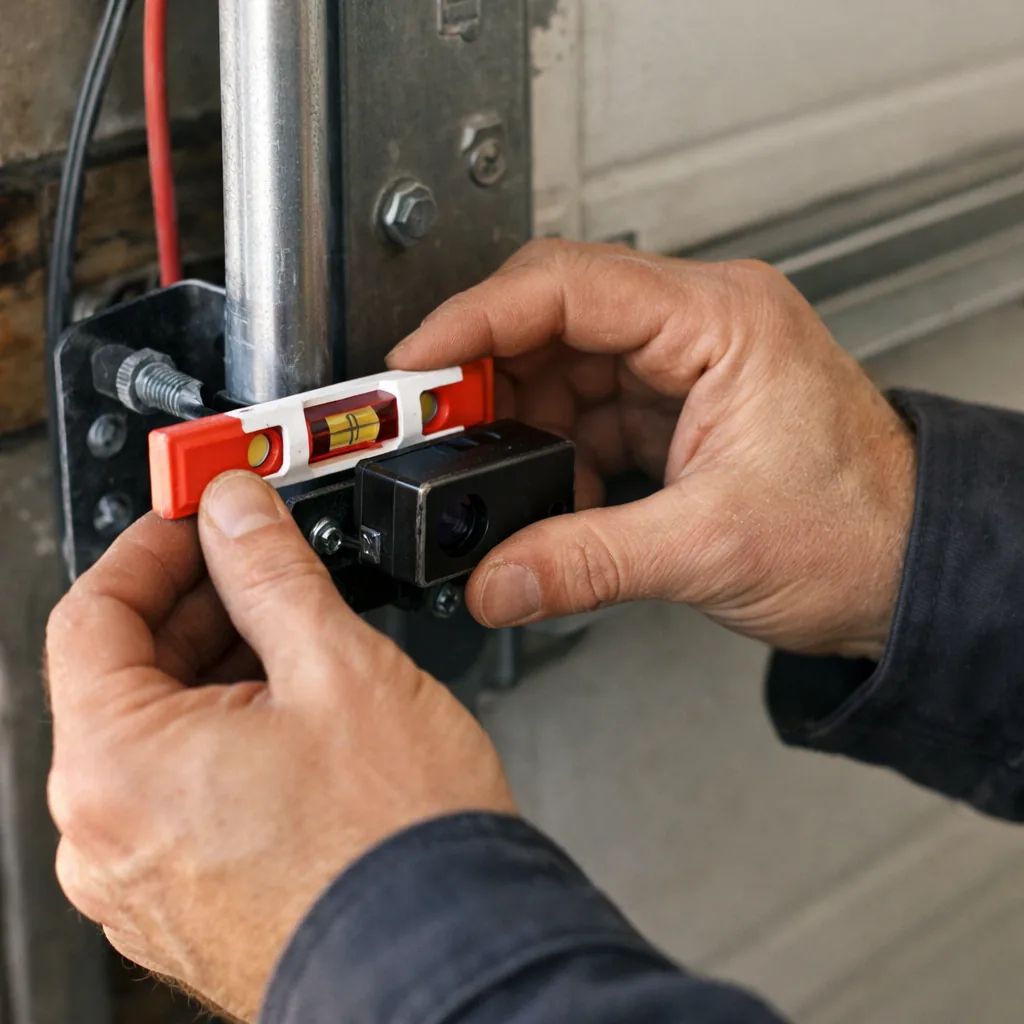
Alignment of the two eyes
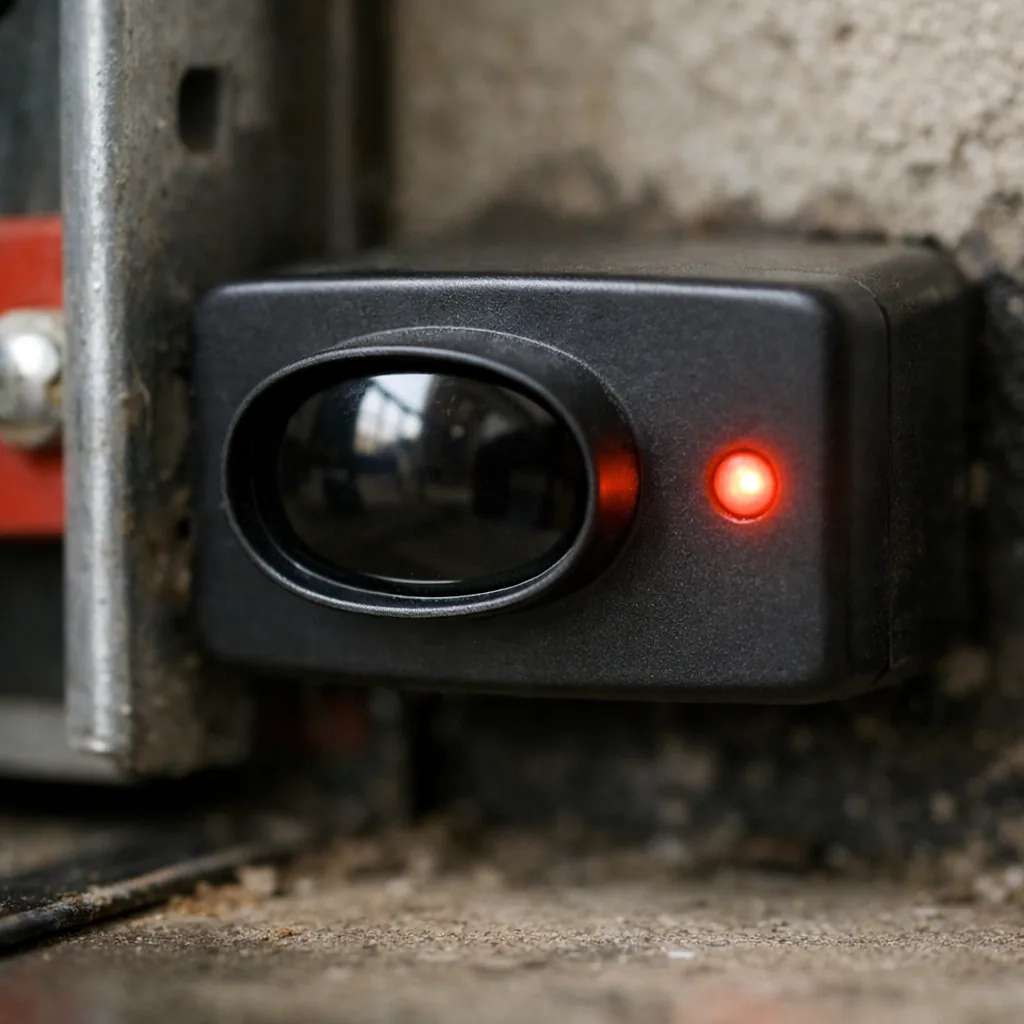
Each sensor has a small indicator light. A steady light on the receiving eye means it sees the beam. A dark or flickering light means the units are pointing slightly apart. We re-aim them and tighten the brackets so they hold.
Lenses and the line of sight
Dust, a spider web, a leaf, or a stored item leaning into the opening can all break the beam. We clean the lenses and check that nothing sits in the path. Direct low sun hitting the receiving eye can also cause false reversals, and we look for that.
Wiring from the sensor to the opener
The sensors run on thin low-voltage wire that is often stapled along the wall and rail. We follow it from each sensor to the opener, looking for cuts, pinches, staples driven too tight and corroded terminals.
The opener's own response
Once the sensors read correctly we run the door through full cycles and check that it reverses when we deliberately block the beam. If it does not, the fault is inside the opener and we say so.
Replacement when repair is not enough
A cracked housing, a dead emitter or a wire run that is damaged inside the wall means a new pair is the sound fix. Sensor replacement is a short job on most doors, and we confirm the new pair is compatible with your opener before installing.
The visit
How a sensor repair visit goes
-
You tell us what the door does
Does it close and bounce back, blink the light, click without moving, or work only when you hold the button down? Those details narrow the cause before we arrive.
-
We come out and test
Our uniformed technician checks both sensors, the wiring and the opener's response, and takes the door through a few cycles to see the fault for themselves.
-
We explain it and quote it
You hear what we found in plain words and get an upfront quote before any work begins. If a realignment solves it, that is all we do.
-
We fix it and test the reversal
We adjust, rewire or replace, then test that the door stops and reverses when the beam is blocked. The repair is backed by a parts-and-labor warranty.
A door that will not close is a door that will not secure your garage.
Describe what the sensors are doing and we will tell you what they likely need.
Sensor work
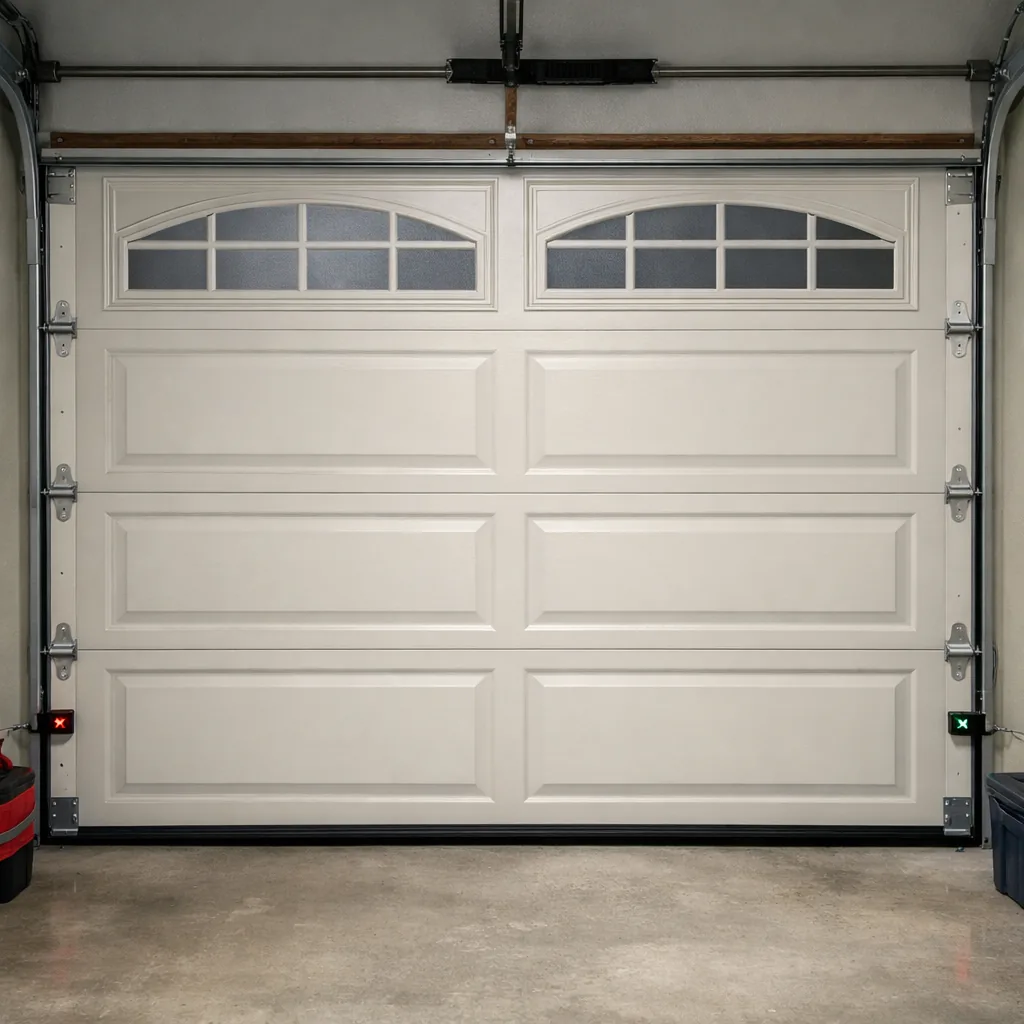
Sensor repair and the finished result
Questions
Garage door sensor questions
How do I know the problem is the sensors and not the opener?
Can I close the door in the meantime?
Is it better to repair or replace a garage door sensor?
What drives the cost of a sensor repair?
How long does the work take?
What should I have ready when I call?
Warren, MI
Door bouncing back up or the light blinking?
Leave it as it is and tell us what you are seeing. We are locally owned and operated, licensed and insured, and we will come out, test the sensors, and explain the fix before any work starts.